
Vibe Coding in 2026: Who's Watching the Code You Didn't Write?
AI writes 80% of your code now. You ship fast and it (usually) works. But when Cursor builds your auth system and Copilot writes your API routes, who's responsible when something breaks?

James Wolf
Founder @ SlyDuck
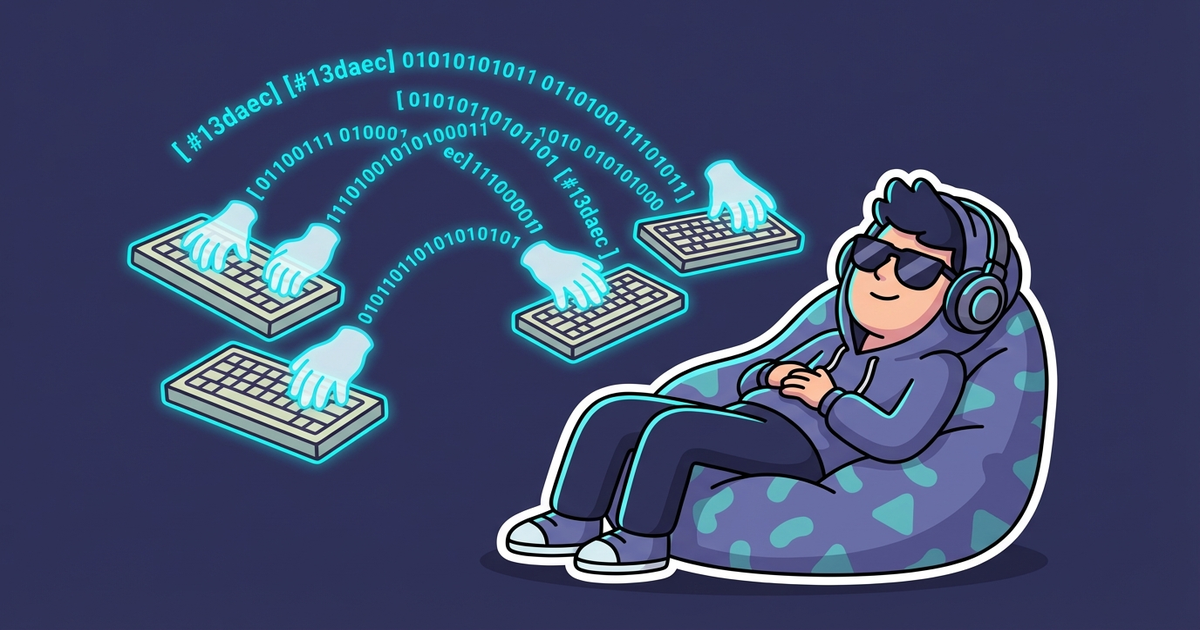
Welcome to the Vibe Coding Era
It's 2026. You describe what you want, and AI builds it. You "vibe" with the code—accepting suggestions, steering direction, shipping features faster than ever.
The results speak for themselves:
- Side projects go from idea to production in a weekend
- Solo developers build what used to require teams
- "I'll learn that framework later" became "I'll let Claude handle it"
This is genuinely amazing. But there's a catch nobody's talking about.
The Confidence Gap
When you write code yourself, you know it intimately. You know why that function exists, what edge cases you considered, and what shortcuts you took.
When AI writes your code, you have a different relationship with it. You know it works (you tested it). But do you know how it works? Do you know what dependencies it pulled in? Do you know what happens when that third-party API returns a 500?
This isn't a criticism. It's just... different. And it requires a different approach to monitoring.
What AI-Generated Code Looks Like in Production
The Good
- It often follows best practices you wouldn't have known about
- It's usually well-structured and readable
- It ships fast
The Hidden
- Dependencies you didn't explicitly choose
- Error handling patterns you didn't review
- Authentication flows you didn't fully trace
- API integrations you haven't stress-tested
The Unknown
- How it behaves under edge cases
- What it does when dependencies break
- Whether it's actually secure or just looks secure
Real Talk: The "It Works" Trap
Here's a pattern I see constantly:
- Developer prompts AI: "Build me a user authentication system"
- AI generates complete auth with sessions, JWT, password hashing
- Developer tests: Can log in, can log out, can reset password
- Developer ships: "Auth works!"
What wasn't tested:
- What happens when the session store goes down?
- Is the JWT actually validated on every request?
- Are passwords hashed with a current algorithm?
- Is there rate limiting on login attempts?
- What happens if someone fuzzes the reset password endpoint?
The code might handle all of this perfectly. Or it might not. And that's the point—you don't know what you don't know.
Why Traditional Code Review Doesn't Scale
"Just review the code before shipping."
Sure. But let's be honest about what that looks like in 2026:
- AI generates 500 lines of code in 30 seconds
- You skim it for obvious problems
- It looks reasonable, matches what you asked for
- You accept and move on
This isn't laziness. This is the reality of modern development velocity. We're building faster than we can comprehensively review. That's the tradeoff we've made.
So what do we do about it?
Monitoring Is the New Code Review
Here's the mindset shift: You can't review everything before it ships, but you can watch everything after it ships.
Uptime Monitoring
Your AI-generated code might have an unhandled exception that only triggers at 3 AM under specific conditions. Uptime monitoring catches that immediately.
Dependency Scanning
Cursor added 12 packages to your project. Do you know what they are? Do you know if they have vulnerabilities? Daily dependency scans tell you.
Performance Monitoring
That beautifully generated database query might work great with 100 records. What about 100,000? Performance monitoring shows you before users complain.
Error Tracking
When that edge case finally hits, you need to know about it before your users do.
The Vibe Coder's Monitoring Stack
If you're building with AI assistance (which, in 2026, is basically everyone), here's what you actually need:
1. Know When It's Down
AI-generated code or not, downtime is downtime. Monitor your sites. Get alerts.
2. Know What's Inside
Run dependency scans regularly. Know what packages you're shipping. Know when they have security issues.
3. Know When It's Slow
Performance problems in AI-generated code often come from inefficient patterns you didn't catch in review. Monitor Core Web Vitals.
4. Know What's Exposed
Are you indexed by search engines correctly? Are AI crawlers seeing your content? Is your robots.txt doing what you think?
5. Know Your History
When something breaks, can you roll back? Do you have backups? AI can regenerate code, but can it regenerate your database state?
The New Developer Contract
Here's how I think about it:
Old model: I write the code, I understand the code, I'm responsible for the code.
New model: AI writes the code, I direct the code, I monitor the code, I'm still responsible.
The responsibility didn't go away. The approach to fulfilling it changed.
Practical Steps for Vibe Coders
- Accept that you can't review everything. Stop feeling guilty about accepting AI suggestions you didn't fully trace.
- Set up monitoring on day one. Before you ship, have uptime monitoring in place. It takes 5 minutes.
- Run dependency scans regularly. Know what's in your node_modules, even if you didn't put it there.
- Back up everything. Yes, your code is in Git. But your data, your config, your environment—back those up too.
- Check your public surface. Run SEO scans. Check your robots.txt. Know what's visible to the world.
The Bottom Line
Vibe coding is the future. AI-assisted development is how most of us build now. And that's genuinely great—we're shipping more, faster, with fewer bugs than we would have written ourselves.
But "it works" isn't the finish line. It's the starting line.
The code you didn't write is still your code. The dependencies you didn't choose are still your dependencies. The vulnerabilities you didn't introduce are still your vulnerabilities.
Monitor accordingly.
---
SlyDuck gives you one dashboard to monitor uptime, dependencies, performance, and SEO across all your AI-built projects. Try it free — first project is always free.
Vibe code with confidence
Let AI write the code. Let SlyDuck watch its back. Monitor dependencies, uptime, and security across all your AI-built projects.
Watch Your Vibe CodeJames Wolf
Founder @ SlyDuck
Building SlyDuck: the growth dashboard for vibe coders. Builder, leader, Dad, creator.
Related Articles
The Real Cost of Vibe Coding: Technical Debt Nobody Warns You About
"Two engineers can now create the tech debt of fifty." Here's what that actually means for your AI-built projects—and how to manage it.
Is Lovable Secure? What CVE-2025-48757 Means for Your App
In May 2025, a vulnerability exposed 170+ Lovable-built apps. Here's what happened, whether it affects you, and what to do about it.