
The Real Cost of Vibe Coding: Technical Debt Nobody Warns You About
"Two engineers can now create the tech debt of fifty." Here's what that actually means for your AI-built projects—and how to manage it.

James Wolf
Founder @ SlyDuck
The Quote That Stings
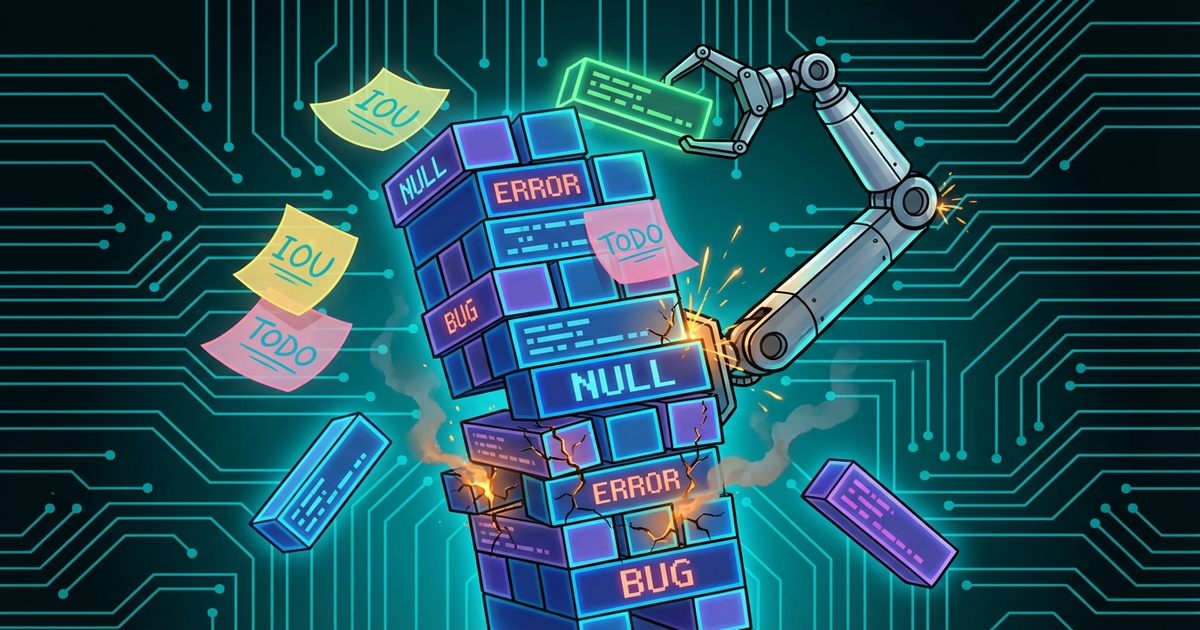
"Two engineers can now create the tech debt of fifty."
This quote has been circulating in discussions about vibe coding, and it contains an uncomfortable truth.
When AI writes your code, you ship faster. But that speed comes with hidden costs that don't show up until weeks or months later.
This post isn't anti-vibe-coding. It's pro-understanding what you're signing up for.
What Is "Vibe Coding Technical Debt"?
Traditional technical debt: "We took shortcuts we knew about to ship faster."
Vibe coding technical debt: "We shipped code we don't fully understand because it worked."
The difference is crucial. Traditional debt is intentional. You know you're cutting corners. You can estimate the cost of fixing it later.
Vibe coding debt is often invisible. You don't know what you don't know. The AI made decisions you never reviewed. And the bill comes due unexpectedly.
How It Accumulates
The Acceptance Pattern
You prompt. AI generates 200 lines. You test the feature. It works. You accept.
Did you read all 200 lines? Probably not. Did you understand the design decisions embedded in that code? Definitely not.
Each acceptance adds a little bit of "code I don't fully understand" to your codebase. Over time, that compounds.
The Dependency Creep
AI loves suggesting packages. "Let me add lodash for that." "I'll use moment.js for dates." "This axios wrapper will help."
You now have dependencies you didn't choose. Each one:
- Has its own update cadence
- Might have security vulnerabilities
- Might conflict with other packages
- Adds to bundle size
Three months later, npm audit shows 47 vulnerabilities and you have no idea which packages are even necessary.
The Architectural Drift
AI doesn't maintain architectural vision. It solves the problem in front of it.
Ask it to build a user system: One approach.
Ask it to add teams: Different approach.
Ask it to add permissions: Another different approach.
Over time, you end up with multiple patterns solving similar problems. No consistent structure. Future changes require understanding several different architectures within the same codebase.
The Context Loss
You built this feature two months ago. Now it's broken. You look at the code.
Questions you can't answer:
- Why is it structured this way?
- What edge cases does this handle?
- What happens if I change this line?
- Is this dead code or does something depend on it?
With hand-written code, you remember the context. With AI code, there is no original context to forget—it never existed.
The 30/60/90 Day Timeline
Day 30: Still Vibing
Everything feels great. You're shipping fast. Sure, there's some code you don't fully understand, but it works. Why worry?
Day 60: First Symptoms
- Bug fix takes longer than expected because you're tracing unfamiliar code
- An update breaks something and you don't know why
- You're scared to refactor because you don't understand the dependencies
Day 90: The Reckoning
- Simple features take as long as complex ones
- Debugging consumes more time than building
- You consider rewriting from scratch
- Or worse: you're afraid to touch it at all
Real Symptoms of Vibe Debt
You're Afraid to Update
"npm update might break something" becomes your mantra. Dependencies stay pinned. Security vulnerabilities accumulate. Because updating means understanding what might break.
AI Fixes Break Other Things
You ask AI to fix a bug. It does. But the fix introduces a new bug somewhere else. Because AI doesn't have context for your whole system.
You're Duplicating Instead of Refactoring
Need similar functionality? Easier to generate it fresh than to extract and reuse. Codebase bloats. Similar code lives in multiple places.
Simple Questions Have No Answers
"How does authentication work in this app?"
"Where is user data stored?"
"What happens when X fails?"
You don't know. The AI didn't document it. There's no one to ask.
The Stats That Should Scare You
From various 2025 studies:
- 45% of AI-generated code has security vulnerabilities
- 40% of AI database queries are vulnerable to SQL injection
- Projects with heavy AI usage show declining code quality over time
- Developers spend more time deciphering AI code than implementing features
This isn't AI being bad. It's AI being what it is: a tool that optimizes for "works" without context for "maintainable" or "secure."
How to Manage Vibe Coding Debt
1. Slow Down (Sometimes)
Not every feature needs to be vibed into existence. When you're building something critical:
- Read the generated code before accepting
- Ask AI to explain what it generated
- Take time to understand the approach
2. Document the Why
After generating code, add comments explaining:
- What this section does
- Why this approach was chosen
- What prompts generated it (seriously, this helps)
3. Regular Refactoring Sessions
Schedule time specifically to:
- Review code you didn't write
- Consolidate duplicate patterns
- Remove dead code
- Update documentation
"Tech debt cleanup" should be a recurring calendar item.
4. Automated Safety Nets
Since you can't manually review everything:
- Dependency scanning: Know when packages are vulnerable
- Automated tests: Catch regressions from changes
- Performance monitoring: Notice when things degrade
- Error tracking: Know what's breaking in production
5. Know When to Hand Off
If your vibe-coded project succeeds, it may outgrow the vibe coding model. Signs it's time for traditional development:
- You're spending more time debugging than building
- Every new feature introduces regressions
- You need reliability guarantees you can't verify
The Right Mindset
Vibe coding isn't free. It's a tradeoff:
What you get:
- Faster initial development
- Ability to build without deep expertise
- More experiments per unit time
What you pay (eventually):
- Maintenance overhead
- Security blind spots
- Debugging difficulty
- Refactoring fear
This isn't a condemnation. Tradeoffs are fine. But they should be conscious.
The Sustainability Question
Can you build a long-term, sustainable product through vibe coding?
The honest answer: Maybe. But probably not without eventually bringing in traditional development practices.
Vibe coding excels at:
- Getting to v1
- Testing ideas quickly
- Building things that don't need to last forever
Vibe coding struggles with:
- Long-term maintenance
- Complex, evolving requirements
- Teams of people working together
The winning strategy might be: Vibe code to validate, then properly engineer what succeeds.
Practical Next Steps
- Audit your codebase honestly. How much do you actually understand?
- Set up automated scanning. Dependencies, at minimum.
- Schedule debt cleanup. Even 2 hours/month helps.
- Document as you go. Future you will thank present you.
- Be honest about limits. Some things shouldn't be vibed into existence.
---
SlyDuck helps you monitor the symptoms of technical debt—outdated dependencies, degrading performance, security vulnerabilities. Start monitoring what your AI code is really doing.
Keep your AI code healthy
You can't review every line AI generates. But you can monitor what it ships. SlyDuck tracks dependencies, performance, and uptime—the symptoms of accumulating debt.
Monitor Your Vibe CodeJames Wolf
Founder @ SlyDuck
Building SlyDuck: the growth dashboard for vibe coders. Builder, leader, Dad, creator.
Related Articles
Is Lovable Secure? What CVE-2025-48757 Means for Your App
In May 2025, a vulnerability exposed 170+ Lovable-built apps. Here's what happened, whether it affects you, and what to do about it.
Vibe Coding Security Checklist: 10 Things to Check Before You Ship
45% of AI-generated code has security vulnerabilities. Here's a plain-English checklist to catch the most common issues before they become your problem.