
Technical Debt from AI-Generated Code: The 2026 Reality
Cursor and Copilot write great code fast. But six months later, you're maintaining a codebase you don't fully understand.

James Wolf
Founder @ SlyDuck
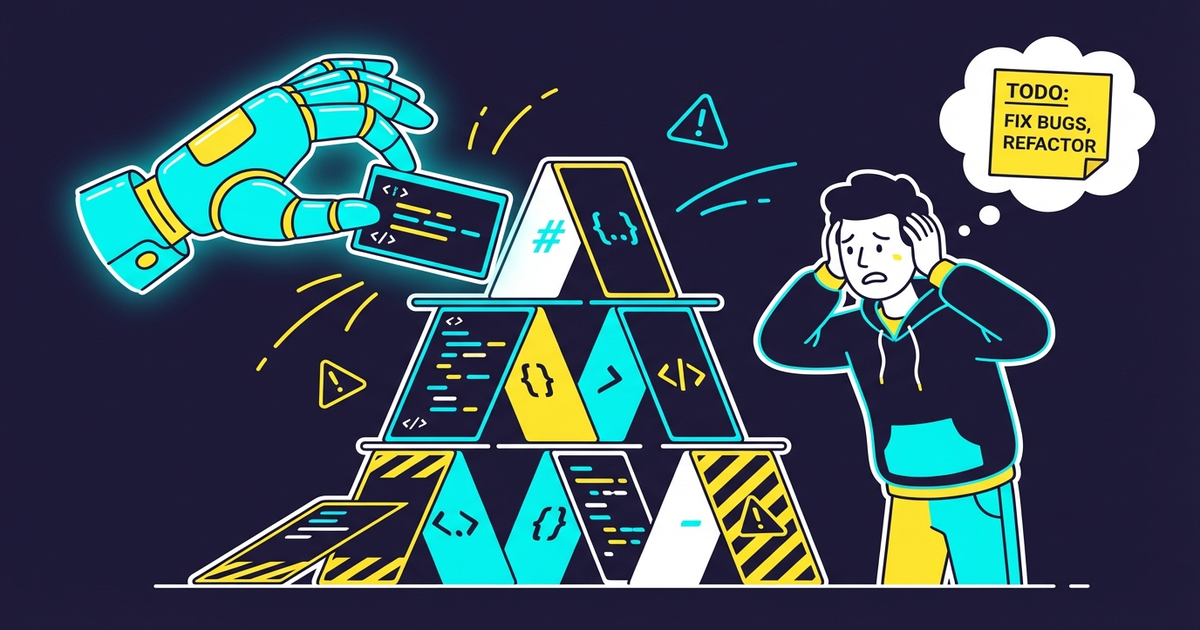
The New Kind of Technical Debt
Traditional technical debt: "We wrote this quickly and cut corners."
AI technical debt: "This works but I'm not entirely sure how or why."
The original author doesn't exist. You can't ask them questions.
How AI Debt Accumulates
The Acceptance Pattern
You prompt, AI generates, you test, you accept. Six months later: "Why is it doing that?"
The Integration Pattern
AI suggests a library you've never used. Your codebase inherits its opinions.
The Context Loss Pattern
AI doesn't know your conventions. Your codebase becomes two styles.
Why This Is Different
- You can't ask the author
- You might know WHAT without knowing WHY
- AI makes implicit decisions you don't see
How to Manage AI Technical Debt
- Read before accepting - Not just skim. Read.
- Document the "why" - What prompt generated this
- Smaller generations - Easier to understand and review
- Test edge cases - AI is great at happy paths
- Refactor regularly - Schedule time to review AI code
- Track dependencies - Know what's in your package.json
The Mindset Shift
AI code isn't "free." It's code you're taking responsibility for.
Ship faster. But don't ship blind.
---
SlyDuck helps you monitor what you ship: dependencies, performance, uptime. Start monitoring.
Know what you shipped
AI writes fast. SlyDuck watches what it built—dependencies, performance, security. Take responsibility for code you didn't write line by line.
Monitor AI-Built ProjectsJames Wolf
Founder @ SlyDuck
Building SlyDuck: the growth dashboard for vibe coders. Builder, leader, Dad, creator.
Related Articles
The Real Cost of Vibe Coding: Technical Debt Nobody Warns You About
"Two engineers can now create the tech debt of fifty." Here's what that actually means for your AI-built projects—and how to manage it.
Is Lovable Secure? What CVE-2025-48757 Means for Your App
In May 2025, a vulnerability exposed 170+ Lovable-built apps. Here's what happened, whether it affects you, and what to do about it.