
The 5-Minute Project Health Check
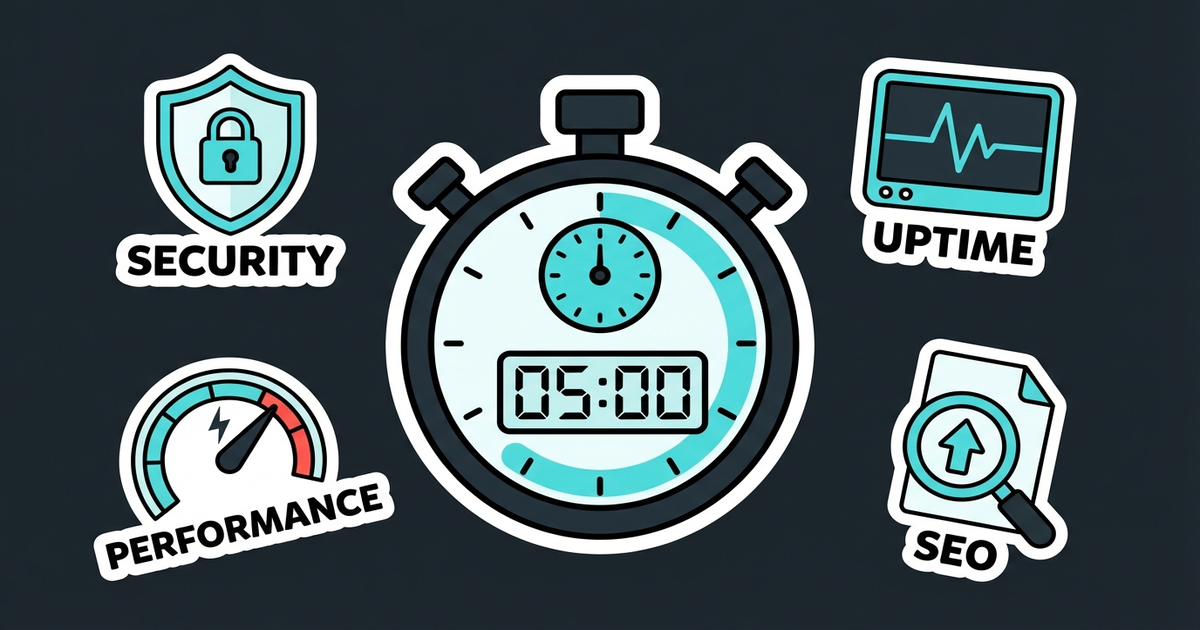
You just connected a project to SlyDuck. In five minutes, you'll know more about its health than you did in the last six months. Here's what happens.

James Wolf
Founder @ SlyDuck
Minute 0: Connect Your Project
Add your project URL and connect your GitHub repo. That's it. No config files, no environment variables, no webhooks to set up.
Minute 1: Uptime Check
First thing that happens: we ping your site.
- Is it up? Green checkmark.
- How fast did it respond? Response time logged.
- SSL certificate? Detected, expiry date noted.
You now know your site is reachable and when your SSL expires. Most developers don't know their SSL expiry date until the browser starts screaming at visitors.
Minute 2: Dependency Scan
If you connected GitHub, we're already scanning your package.json (or requirements.txt, or Gemfile, or go.mod).
Within a minute:
- Total dependencies counted
- Outdated packages flagged
- Security vulnerabilities identified (with severity levels)
That npm package you installed two years ago and forgot about? If it has a known CVE, you'll know.
Minute 3: SEO Snapshot
We crawl your site's key pages:
- Title tags present?
- Meta descriptions?
- Heading structure?
- Mobile viewport?
- AI crawler access? (Are ChatGPT and Claude allowed to see your content?)
This isn't a 47-page SEO audit. It's the stuff that actually matters for indie projects.
Minute 4: Performance Baseline
Using Google's PageSpeed Insights API (the same data Lighthouse uses):
- Performance score
- Core Web Vitals (LCP, CLS, FCP)
- Accessibility score
You get real numbers, not vibes.
Minute 5: Your Health Score
All of this rolls up into a single health score:
- Uptime status (is it even working?)
- Security posture (vulnerabilities, SSL)
- Performance grade (speed matters)
- SEO readiness (can people find you?)
What You Now Know
In five minutes, you went from "I think my site is fine" to actually knowing.
- SSL expires in 23 days (better renew)
- 3 critical vulnerabilities in dependencies (better update)
- Performance score of 67 (better optimize those images)
- Missing meta descriptions on 4 pages (better fix)
And tomorrow? SlyDuck checks everything again automatically.
The Alternative
Without automated monitoring:
- You check uptime manually (when you remember)
- You run
npm auditoccasionally (when something breaks) - You maybe check PageSpeed once a year (before a launch)
- SSL expiry surprises you (in production)
Try It
Add a project. Set a 5-minute timer. See what you learn.
---
Your first project is free. Start your health check.
See what 5 minutes reveals
Add your project and watch SlyDuck scan uptime, dependencies, performance, and SEO in real-time. You'll know more about your project than you have in months.
Start Your 5-Minute CheckJames Wolf
Founder @ SlyDuck
Building SlyDuck: the growth dashboard for vibe coders. Builder, leader, Dad, creator.
Related Articles
Stop Checking 5 Dashboards Every Morning
You wake up, grab coffee, and start the ritual: Vercel, then UptimeRobot, then GitHub, then PageSpeed, then... There's a better way.
Your Clients Don't Care About Uptime (Until It's Down)
For freelancers and agencies: how to proactively report project health to clients before they notice problems. Turn monitoring into a selling point.